
US–Israel Strikes on Iran — Are We Close to Nuclear Conflict?
What we know so far
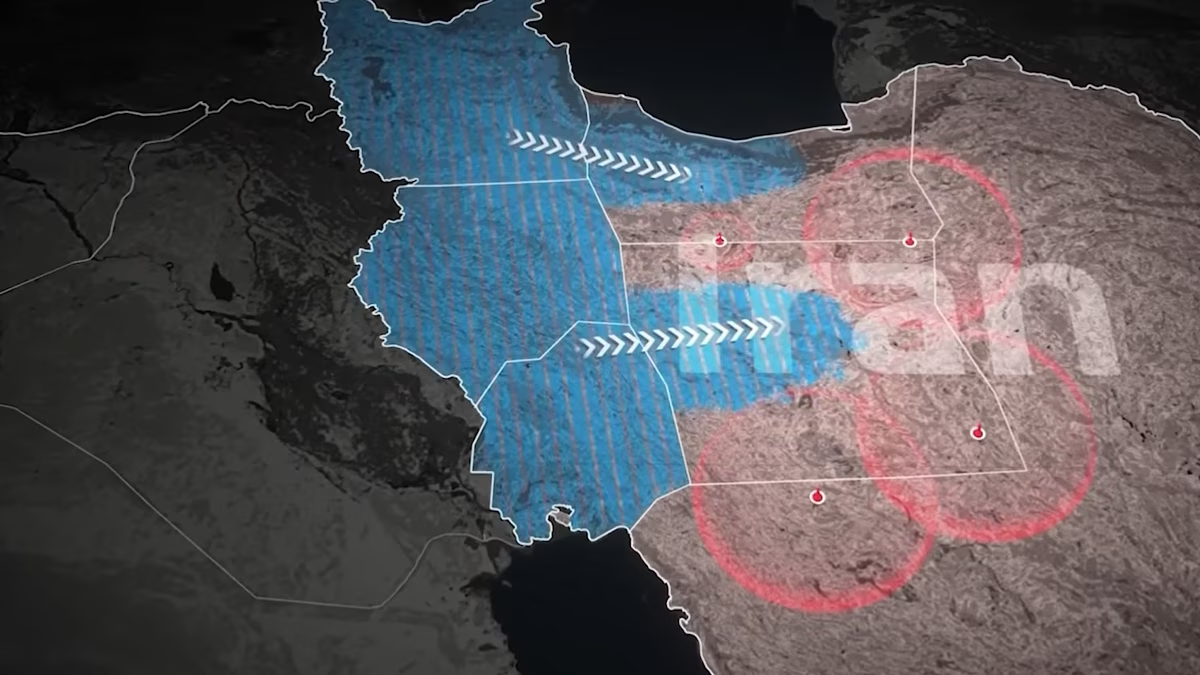
US and Israeli forces launched a large‑scale air and missile campaign against Iranian military and command targets in late February 2026, reportedly killing Supreme Leader Ayatollah Ali Khamenei and decimating parts of Iran’s Revolutionary Guard leadership. Iran responded by firing missiles and drones at US and allied bases in the Gulf, damaging airfields, sinking or damaging several tankers, and effectively closing the Strait of Hormuz to much commercial shipping.
In public statements, both Washington and Tehran have skirted the edge of nuclear rhetoric. The US and Israel frame the operation as an effort to prevent Iran from acquiring nuclear weapons and to weaken its regional reach, while Iranian officials have warned of “all‑out war” if foreign powers deepen their involvement. So far, however, none of the attacks has targeted each other’s nuclear facilities in a way that would clearly trigger a nuclear response under most strategic doctrines.
Nuclear weapons factor
Iran has repeatedly stated it does not seek nuclear weapons, but it has amassed a large stockpile of highly enriched uranium and continued to develop ballistic missile technology, which alarms both Israel and the US. Western intelligence assessments in 2025 suggested Iran was still several years away from a working nuclear weapon, even if it resumed a crash program, but that timeline has become more uncertain after repeated strikes and rebuilding efforts.
Both Israel and the US are nuclear‑armed states, and Israel has long signaled it may strike preemptively if it sees Iran moving toward a bomb. Analysts at think tanks such as the Royal United Services Institute and the Council on Foreign Relations warn that the current campaign increases the risk of a “longer, deadlier war” — including the possibility that Iran might one day seek nuclear weapons as a deterrent — but they stop short of predicting imminent nuclear war.
Why a full nuclear war is still unlikely
Strategic analysts generally agree that the main nuclear powers — the US, Russia, China, and to a lesser extent Israel — understand that using nuclear weapons would almost certainly spark uncontrollable escalation. Even in a worst‑case scenario where Iran crossed a nuclear threshold, or where a nuclear‑armed proxy (such as Hezbollah or Hamas) became involved, most experts expect the default response would be still be conventional strikes, cyberattacks, and sanctions, not a nuclear first strike.
Instead, the immediate danger lies in the classic “spiral” of escalation: one side hits a strategic target (oil infrastructure, command centers, missile bases), the other retaliates more aggressively, and both overestimate the other’s red lines. The risk is less a deliberate nuclear exchange and more that a conventional war could spin out of control, forcing a nuclear‑armed state to consider nuclear use in desperation.
What to watch in the coming weeks
Several indicators will help determine whether the current US–Israel–Iran war stays conventional or moves closer to nuclear brinkmanship. Those include whether Iran attempts to enrich uranium to weapons‑grade levels, whether Israel or the US threaten or strike Iran’s remaining known nuclear‑enrichment sites, and whether any state explicitly mentions nuclear weapons in its public statements or communications.
Additionally, the role of outside powers such as Russia and China will matter. If they openly arm Iran or provide advanced missile or air‑defense technology, the incentive for a nuclear‑armed state to “de‑escalate” conflicts through conventional means weakens. For now, though, the international community is still focused on closing off the Strait of Hormuz, stabilizing oil prices, and urging restraint, rather than preparing for a nuclear war.
In short, the current US–Israel–Iran conflict has raised the backdrop risk of nuclear war, but there is no evidence yet that any side plans to cross the nuclear threshold. The more immediate danger is a prolonged regional war that strains global energy markets and increases the long‑term risk that Iran may one day pursue nuclear weapons out of fear of future attacks.


